Hominy Valley, North CarolinaWater emergencies, 24/7ZIP 28715
Outside water recovery ยท Asheville, NC

Storm Flood Cleanup in Asheville

Muddy water changes the cleanup priorities. Before flooring can be dried or belongings returned, the building needs safe access, controlled removal of accumulated water and decisions about the materials exposed to contamination.

(888) 578-4720Discuss the floodwater recovery scope
Sediment removal Contamination assessment Staged material recovery
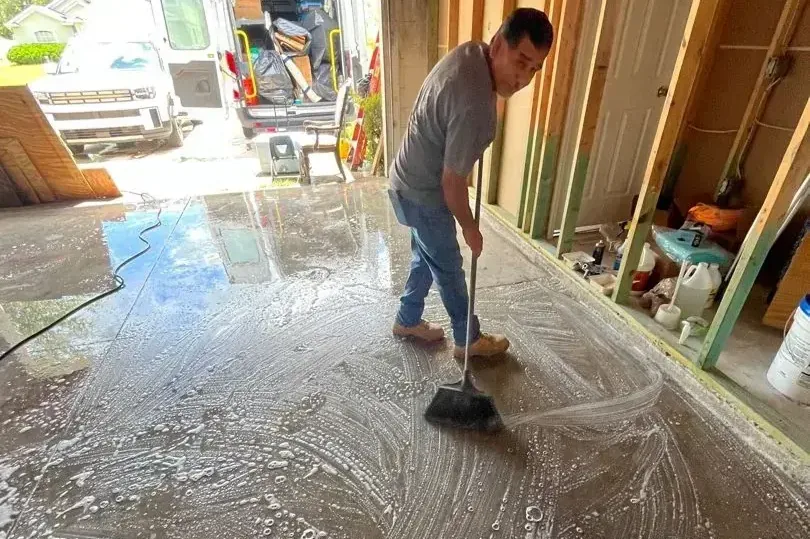
A worker sweeps water across a wet concrete floor toward an open doorway
Entry conditionWait for safe building access
Cleanup focusWater and sediment removal
Material assessmentAssess contaminated porous layers
Recovery recordDocument damage before disposal
Immediate precautions

First steps for storm flood cleanup in Asheville

  1. 1

    Wait for safe access

    Electrical, structural or contamination hazards can prevent safe building entry. Exterior observations and official access instructions help inform the initial request for recovery assistance.

  2. 2

    Record the visible flood impact

    Photograph water marks, deposited mud and damaged belongings only from safe locations. Keep a list of affected rooms so cleanup decisions can be connected to the original conditions.

  3. 3

    Limit movement between areas

    Separate clean storage from wet footwear and belongings. Contaminated items need a handling route before leaving the affected rooms.

  4. 4

    Describe the entry and debris

    Mention where outside water entered, whether accumulation remains and which materials appear affected. That description supports planning for extraction, disposal access and the first cleaning stage inside.

Planning the scope

What does storm flood cleanup cost in Asheville, NC?

Storm flood cleanup costs in Asheville depend on contamination, deposited debris and how much of the building became wet. Removing unsuitable porous layers and cleaning exposed assemblies can require substantially more work than pumping visible water alone.

Limited outside-water entry

$2,500 to $5,000
  • Small affected boundary
  • Accessible sediment cleanup
  • Limited porous removal

Several flooded rooms

$5,000 to $12,000
  • Connected contamination assessment
  • Broader surface cleaning
  • Multiple drying zones

Extensive building flooding

$12,000 to $20,000+
  • Complex debris handling
  • Wide assembly exposure
  • Coordinated recovery stages

These typical planning ranges depend on the water category, affected area, material class and delay before drying. The water damage cost calculator gives an estimate only; inspection sets the actual scope.

Inside the building

The French Broad River and Swannanoa River meet at Asheville. Hurricane Helene caused catastrophic flooding of both rivers in September 2024. For a building taking in outside water, recovery begins with present access conditions and the materials the water reached, followed by a cleanup sequence that handles contamination before routine drying.

Outside water leaves more than a wet floor. Describe entry points, sediment and affected rooms to begin a recovery scope that accounts for cleanup and drying together.

(888) 578-4720Assess the flood recovery needs

Begin at the entry boundary

Biltmore Village flooded during the remnants of Hurricanes Frances and Ivan in September 2004. That history makes a practical flood recovery plan useful for affected properties. Current work should record where water entered, how high visible deposits reached and which passages can support safe equipment and disposal movement.

  • Keep occupants outside wet areas with uncertain structural or electrical conditions.
  • Record sediment marks and affected contents before cleanup changes the scene.
  • Separate items awaiting evaluation from debris selected for controlled disposal.

Clean the assembly before drying it

At a Shiloh property, a muddy threshold may lead into wet floor layers. In Malvern Hills, the assessment may need to follow outside entry into connected interior rooms. The actual wet footprint determines which surfaces need cleaning and which porous materials require removal because of their exposure and condition.

  • Remove deposited debris without tracking it through otherwise unaffected living areas.
  • Evaluate insulation, flooring and wall finishes individually for contamination and damage.
  • Reach the substrate beneath removed coverings before arranging equipment for drying.

Make the recovery sequence visible

Water extraction removes accessible liquid, but flood recovery continues through cleaning and material assessment. Structural drying then addresses suitable retained assemblies. A written scope should distinguish these stages and identify unresolved access needs. Photographs, disposal records and moisture results help explain how the building moved from muddy entry conditions toward a defined repair handoff.

Measured progress

How storm flood cleanup proceeds in Asheville

  1. 1

    Assess the entry conditions

    The initial assessment considers the water source, access hazards and wet footprint. Work boundaries and movement routes are selected before recovery equipment or disposal containers enter the building.

  2. 2

    Recover water and loose deposits

    Recover water and debris to expose damaged surfaces. Document materials before disposal, with handling based on contamination and condition.

  3. 3

    Clean the retained structure

    Suitable exposed surfaces receive cleaning appropriate to the loss. Hidden pockets beneath coverings and inside affected assemblies need attention before drying equipment surrounds the remaining wet materials.

  4. 4

    Track the recovery handoff

    Drying checks and completed cleaning work are documented together. The final scope distinguishes retained structure, removed finishes and remaining repair needs so rebuilding can follow a clear sequence.

Practical answers

Storm Flood Cleanup questions

Can outdoor floodwater be treated like a sink spill?

Outside entry brings a different contamination assessment. Sediment, contact with surrounding surfaces and the condition of affected materials influence cleaning and removal decisions, even if the water looks clearer after it settles.

Should muddy carpet be dried in place?

A flood affected carpet needs contamination and material assessment before drying is selected. Its backing, padding and underlying floor may require removal or cleaning that cannot be accomplished through the exposed carpet face.

What photographs are useful before cleanup?

Safe photographs of entry points, sediment marks, affected rooms and damaged contents help document the event. The record should connect the original exposure with materials removed and work performed during recovery.

Can belongings stay in the wet room?

Contents need assessment and organized handling. Leaving everything in place can restrict cleaning access, while moving contaminated items directly into clean rooms can spread the problem beyond the original wet area.

Does the building need drying after cleaning?

Suitable retained framing, floor layers and other assemblies can remain wet after sediment is removed. Moisture measurements help establish the drying scope and determine whether concealed layers still need access.

When can finish repairs begin?

Source conditions, cleanup completion and retained material moisture all matter. A staged handoff identifies areas ready for repair and any remaining access or drying work before new finishes cover the structure.

Service area

Storm flood cleanup coverage

Flood cleanup requests can identify Biltmore Village, Shiloh or Malvern Hills and describe the entry route. Report muddy deposits, affected levels and access restrictions so the initial assessment accounts for the conditions inside the building.

The same service nearby: storm flood cleanup in Candler, Woodfin, Fletcher.

Water damage restoration in Asheville · every town covered

24/7 water loss assistance

Build a clear sequence after floodwater entry

Controlled removal, cleaning and material measurements help turn a damaged interior into an organized repair plan with each remaining task clearly identified for the property.

Buncombe County service area
Wet rooms need a drying plan(888) 578-4720