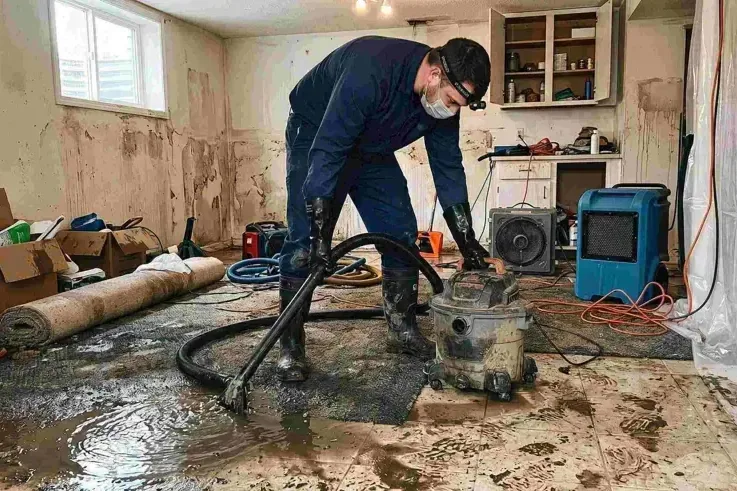
A Woodfin sewer bill can be part of the first paperwork gathered after an indoor backup. The Metropolitan Sewerage District of Buncombe County provides sewer service, while Woodfin Water District provides sewer billing and collection for that district. Knowing this arrangement helps the property contact prepare a clear report. The indoor assessment also needs fixture observations, the affected room locations and a description of any contaminated materials that require controlled cleanup.
Key takeaways
- Keep occupants and pets outside the affected room until it has been assessed.
- Use the account paperwork to identify the utility contact and service details.
- Record which fixtures backed up and which other fixtures were in use at discovery.
- Keep drain repair findings separate from the room cleaning and restoration scope.
Find the account details before describing the backup
The water district transferred its sewer infrastructure to the Metropolitan Sewerage District of Buncombe County in 1991. Its continuing billing role makes an account statement a useful starting document for a property report.
The account holder can identify the service location and preserve any reference number supplied during a utility conversation.
Different parts of town receive water from Woodfin Water District, Asheville Water Authority and Weaverville Water Department. The property file should therefore contain the account details for the actual building.
Keeping the relevant bill available helps the contact direct a service question accurately while the indoor cleanup assessment is being arranged.
A sewage backup cleanup request should lead with the condition inside the building. The report can name the overflowing fixture, the affected room and the visible spread.
That practical description gives the restoration contact a starting point while the property owner gathers the separate information needed for the drain investigation.
- Keep the service account statement with the incident notes.
- Write down the reference supplied during a utility report.
- Name the affected fixture and room in the cleanup request.
- Record the current status of the discharge before arranging entry.
Build a fixture sequence from ordinary observations
A useful sequence begins with what the occupant noticed: a rising toilet bowl, water at a floor drain or discharge at another fixture. The report should also note any fixture being used at the time.
Those observations give the drain professional something concrete to investigate without requiring the homeowner to diagnose the blockage.
The person documenting the event can record whether the discharge continued after fixture use stopped. Any action already taken by a contractor should appear as a separate entry, with the result described in ordinary terms.
This preserves the difference between household observations and findings made during professional inspection or repair.
If more than one room is involved, a simple sketch can show their connection and the location of each affected fixture. Photographs should be taken from outside the contaminated area.
Keeping the report clear and accessible helps the drain contractor and restoration contact discuss the same event even when their visits happen separately.
Keep the contaminated area distinct from household space
The affected room should remain restricted while the cleanup contractor assesses the discharge and the materials it contacted. The project contact needs to know whether a shared doorway or passage connects that room to occupied areas.
That information helps establish a workable access arrangement before equipment or contents move through the building.
Belongings exposed to the discharge should be identified in their original positions where safe documentation is possible. The inventory can include porous floor coverings, stored boxes and furniture touching the affected surface.
The contractor can then explain the proposed cleaning, evaluation or removal for each group of items in the actual work area.
Accessible liquid removal may form part of water extraction, with the cleanup method determined by the condition found on arrival. The owner should ask how the crew will protect adjoining spaces during that work.
A written description of the access route and material handling plan makes the scope easier to follow.
- Keep household traffic away from the affected doorway.
- Identify belongings that were in contact with the discharge.
- Ask the contractor how removed materials will leave the room.
- Record any adjoining area included in the cleanup boundary.
Ask for distinct drain and building findings
The drain contractor's record should explain what was inspected, what was found and what work was performed to address the obstruction or defect. The owner can retain that report alongside utility correspondence.
Together, those records help establish the sequence of source work before the room is prepared for restoration.
The building assessment should name the surfaces and materials affected by the discharge. Wall bases, floor finishes and fixed fittings can each need their own treatment decision.
A room description that separates these components makes it possible to understand why some work concerns cleaning while another part concerns removal or finish replacement.
Once the necessary cleanup is complete, the structural drying assessment can address retained wet materials. Its record should identify the measured locations and the conditions that support the next step.
The owner then has a clear handoff between drain repair, contaminated material work and the evaluation of surfaces that will remain.
Use the actual home to define access and finishes
Much of the town's surviving early housing reflects early twentieth century mill villages. Martel Village and Company Bottom have names tied to the industrial history.
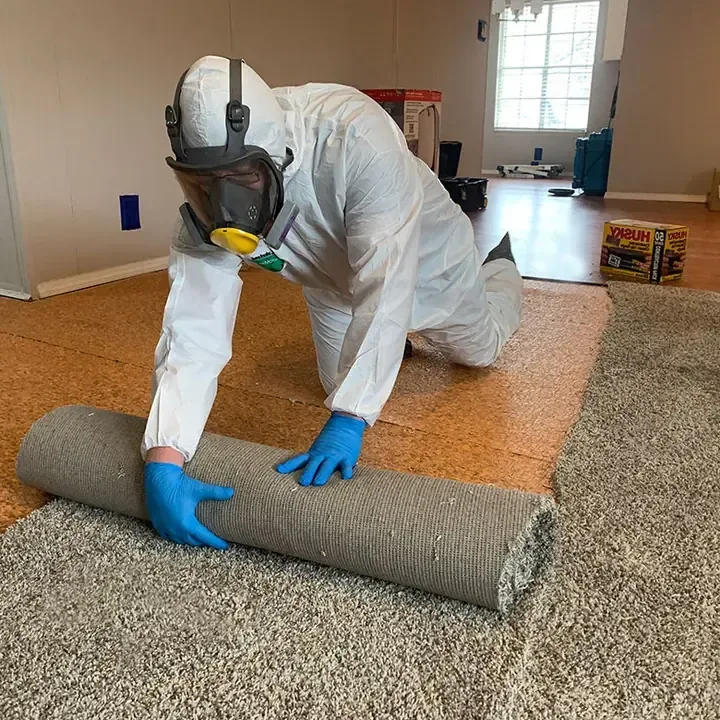
In an individual home, the restoration scope should describe the interior arrangement and materials found during inspection so the work plan fits the building being repaired.
A narrow work area or an obstructed doorway can affect how contents and equipment are moved. The project contact can discuss those constraints before the crew establishes its route.
A photograph of the accessible room arrangement helps explain any temporary relocation of belongings and keeps the household informed about the spaces involved.
The finish proposal should identify transitions between the contaminated area and adjoining dry surfaces. An owner can compare that boundary with the original photographs and material inventory.
This is useful when the repair includes trim, flooring and a fixed fitting with different restoration needs, all connected to the same indoor backup.
- Check the access route against the actual room arrangement.
- Name each affected finish in the repair proposal.
- Preserve photographs where different floor materials meet.
- Account for belongings moved from adjoining dry rooms.
Make the room handoff easy to follow
Before furnishings return, the walkthrough should identify the cleaned surfaces, retained materials and finish repairs still outstanding. The drain contractor’s findings belong beside that room assessment.
A cleared fixture and a cleaned floor answer different questions, so both parts of the work need a clear completion record.
The paperwork can keep utility communications, contractor findings and contents decisions in separate sections of the same file. Each record should use consistent room and fixture names.
A future reviewer can then follow the event from the first discharge through the work performed without confusing an account conversation with an interior inspection.
Keep the utility account reference available for a later billing question in Woodfin, and keep the room inventory ready for the finish contractor. The repair discussion should name the floor covering, trim or fixed fitting involved.
Specific components make an unfinished task easier to assign than a broad instruction to restore the room.
Questions
Why is the sewer bill useful after a backup?
It supplies the account information needed for a utility conversation and helps the owner identify the service relationship. The indoor cleanup report still needs its own description of fixtures, rooms and affected materials.
Which observations help a drain contractor?
The contractor can use the order of fixture changes, the location of the discharge and the activity occurring when it appeared. A written sequence is easier to follow than an account that mixes initial observations with later repair findings.
Can belongings stay in the cleanup room?
The restoration contractor should evaluate exposed items and explain which must move to provide access. The inventory should record their original locations and any treatment or disposal decision made during the job.
What should be explained before household use resumes?
The project contact should describe the completed cleanup, retained material assessment and any unfinished repairs. The homeowner also needs to understand remaining access restrictions and where affected belongings can be placed.